

On Tuesday, February 3, 2026, a new AI automation tool from Anthropic aimed at legal work set off a one-day, $285 billion rout across software, financial-services and asset-management stocks, according to Bloomberg’s reporting — Goldman Sachs’ basket of U.S. software names fell 6% that day, its worst single-day drop since the tariff selloff the previous April. Six days later, on February 9, Workday announced that Carl Eschenbach was out as CEO, effective immediately, and that co-founder Aneel Bhusri — who’d spent the prior two years as executive chairman, one step removed from daily operations — was coming back to run the company himself. Workday’s own statement didn’t name the selloff as a reason. It didn’t have to spell it out: the entire rationale it gave fit on one line. “AI is a bigger transformation than SaaS,” Bhusri said in the announcement, “and it will define the next generation of market leaders.”
Twenty years, four job titles, one company
Bhusri co-founded Workday in 2005 with Dave Duffield, after both had spent years at PeopleSoft — Bhusri as a senior vice president running product strategy and business development, Duffield as the company’s founder before Oracle acquired it in a hostile 2005 takeover. Workday went public in October 2012. Bhusri’s own relationship with the CEO title has been anything but linear since: co-CEO with Duffield from 2009 to 2014, sole CEO from 2014 to 2020, then co-CEO again starting in August 2020 — first with Chano Fernandez, who departed in December 2022, then with Carl Eschenbach — before stepping back to executive chairman in 2024 and handing Eschenbach the job outright. February 2026 was the fourth time he’d changed titles at the company he started, and the first time he’d gone backward into the CEO’s chair rather than out of it.
The CEO who inherited a seat-based business and some painful arithmetic
Eschenbach, a Sequoia Capital partner and Workday board member, joined as co-CEO alongside Bhusri in December 2022, replacing Chano Fernandez, and became sole CEO in February 2024 on the succession timeline the board had set when he arrived. His tenure wasn’t short on hard calls: in February 2025, Workday cut about 8.5% of its global workforce — roughly 1,750 jobs — citing the need to reallocate spending toward AI, as TechCrunch reported at the time. None of it reversed the stock’s slide. By the time Workday announced his departure, the business publication Diginomica — noting the company gave no further explanation for the sudden change — pointed to “massive change at Workday, particularly in its technology leadership and operations,” plus the repeated layoffs, as the backdrop Eschenbach was leaving behind. Workday confirmed to TechCrunch that Bhusri’s return was permanent, not a placeholder while the board searched for someone else. Eschenbach didn’t leave empty-handed: a Form 8-K cited by TechRadar put his exit package at $3.6 million in cash severance plus accelerated vesting of his existing equity awards. He stayed on only as a strategic adviser to the man who’d just replaced him, saying in the company’s own release that it had “been a privilege to serve as CEO over the past three years” and that he was “proud of all we achieved” — including, he added, “laying meaningful groundwork in AI.”
A pay package built for five years, not one earnings call
The board didn’t bring Bhusri back on a caretaker’s salary. According to a Workday regulatory filing reported by Bloomberg Law, his package carries a $1.25 million base salary and a target bonus of up to 200% of that — plus $135 million in stock awards contingent on time and performance. SEC filings break that figure down: a time-based RSU grant with a $60 million grant-date value, and a separate performance-based RSU worth $75 million at grant. When Workday finalized the actual share counts in a March 5, 2026 filing, the performance award — 547,003 shares split into four tranches — pays out only if the stock hits rising price targets over a five-year window and Bhusri stays through it. Fortune put Bhusri’s total package, cash included, at roughly $138.8 million. It is, by construction, a bet that whatever Bhusri does next takes years to prove out — not the kind of grant a board writes for someone it expects to need replacing again soon.
The market’s answer so far has been no
Workday shares fell about 5% the day the change was announced, closing at $154.56. They kept falling: by February 11, the stock had hit a 52-week low of $142.72, down 45% over the trailing year and 32% year-to-date, according to Barchart. On February 23, Jefferies cut its rating on Workday from Buy to Hold and slashed its price target from $325 to $150 — a note that, per multiple outlets’ coverage of it, cited execution risk tied specifically to Bhusri’s return, alongside downgrades of DocuSign, Monday.com and Freshworks on the same AI-disruption logic. By the end of February, Workday stock was down roughly 38% for the year, before a sharp bargain-hunting bounce. Six weeks after a founder walked back into the job on the strength of a one-line AI thesis, the clearest signal from the people pricing the stock was that the thesis alone hadn’t been enough.
What founders should actually take from it
The instinct to read this as vindication for founder control is obvious and not entirely wrong: Bhusri had the standing, the history and the board’s trust to make a change of this size on six days’ notice, in a way a newly hired outside CEO never could have. What the instinct skips is that conviction and correctness are different things, and the market has so far only confirmed the first one. Workday’s stock didn’t rally on the news that its founder was back — it fell, then kept falling, then drew a specific downgrade naming his return as a reason for caution. The man who said AI would define the next generation of market leaders is now the CEO whose own job is the test case for whether a software company built on a seat-counted SaaS model can out-argue that same technology before it gets replaced by it. A $135 million pay package that vests over five years is itself a tell: even the board that made this bet isn’t claiming to know, yet, if it was the right one.
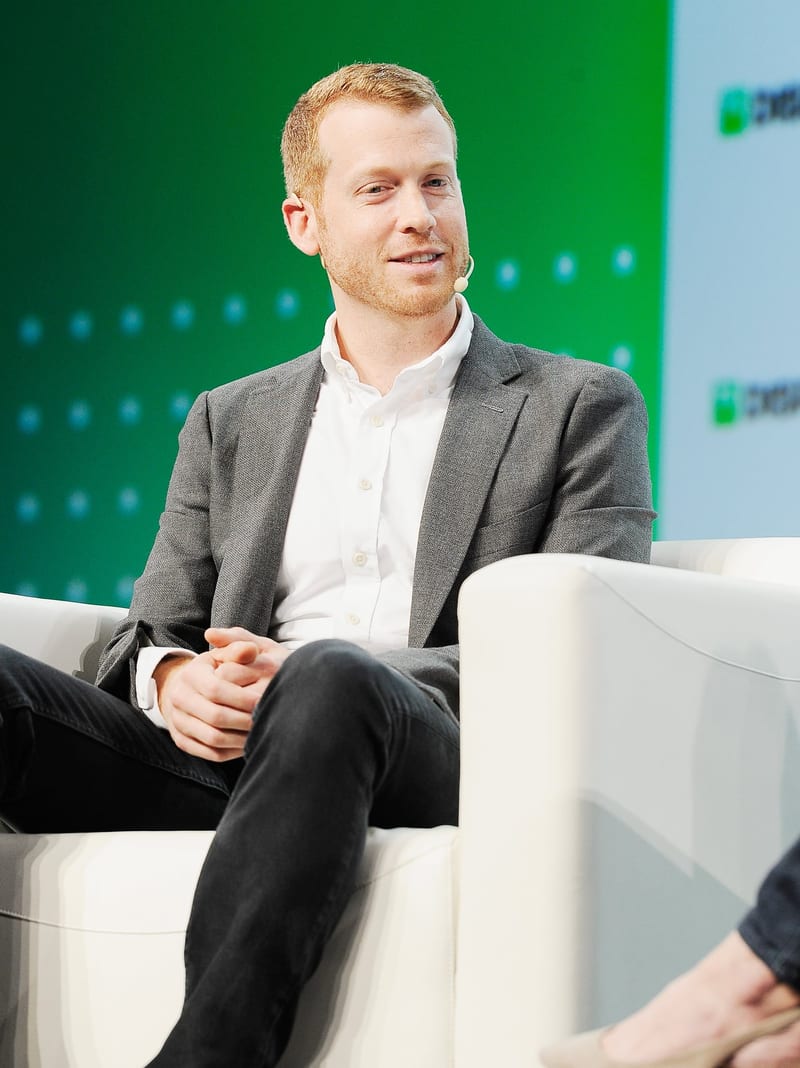
This is an editorial profile assembled from public regulatory filings, company statements and reporting. Sources: Workday Newsroom — Workday Announces CEO Transition as Co-Founder Aneel Bhusri Returns to Lead the Company’s Next Chapter, TechCrunch — Workday CEO Eschenbach departs with co-founder Aneel Bhusri returning as CEO, Bloomberg Law — Workday Co-Founder Returns as CEO Amid Steep Share Decline, Bloomberg Government — Anthropic AI Tool Sparks Selloff From Software to Broader Market, SEC Form 8-K — Workday, Inc., filed Feb. 6, 2026, SEC Form 8-K — Workday, Inc., filed Mar. 5, 2026, Fortune — Workday founder Aneel Bhusri’s billionaire-sized pay package, diginomica — Workday co-founder Aneel Bhusri returns as CEO, ending Carl Eschenbach’s two-year tenure, TechRadar Pro — Workday CEO Eschenbach steps down, co-founder Bhusri to return, CNBC — Workday names Sequoia’s Carl Eschenbach as co-CEO alongside Bhusri, Workday — Aneel Bhusri leadership biography, Wikimedia Commons — File: Aneel Bhusri (8518025145).jpg, photo by Loic Le Meur, CC BY 2.0.
.jpg)