
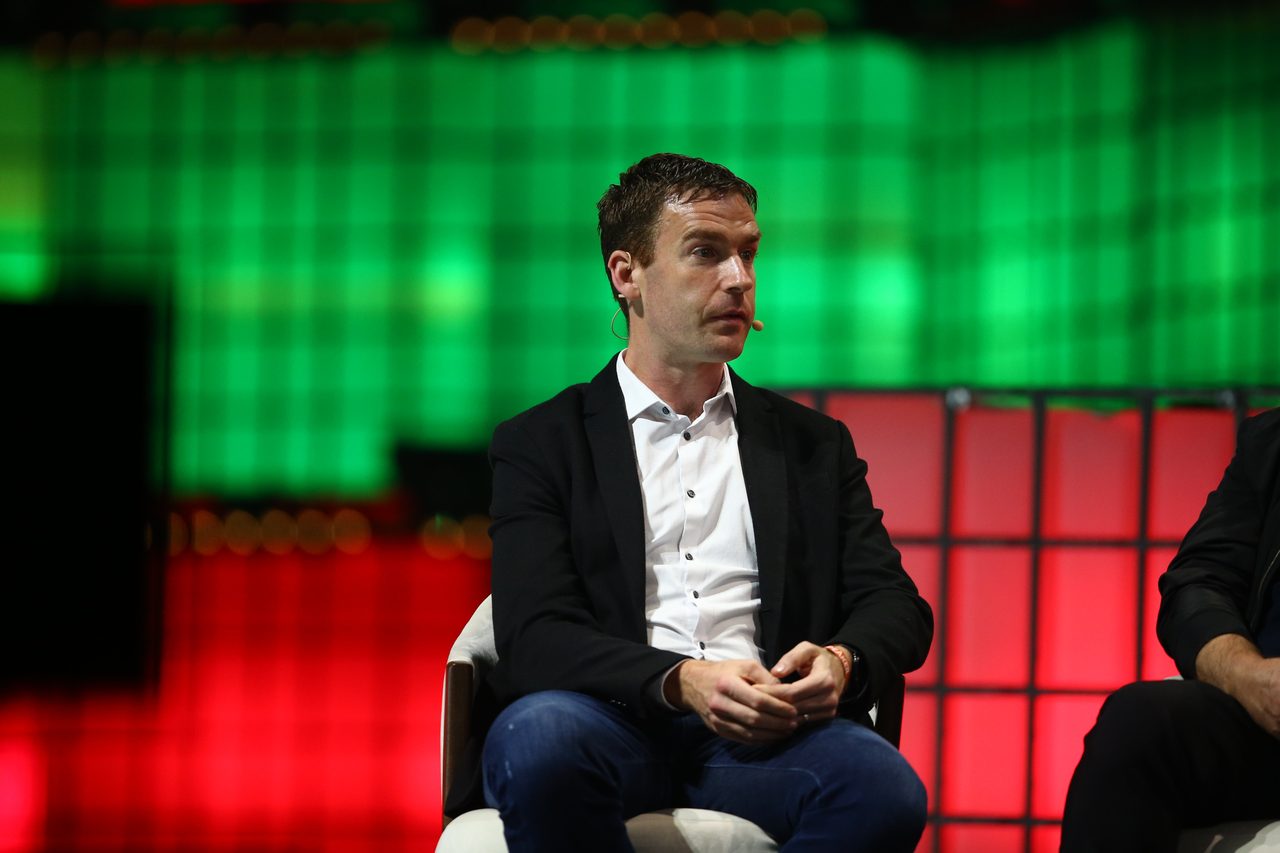
There is a specific hazard in being the founder who publishes. Write enough about how products should be built and you eventually create a public record against which your own company can be measured. Most founders who take this route quietly avoid the collision. They publish the principles, sell the software, and keep the two in separate rooms.
Des Traynor did not get that option. The doctrine he had been putting out for over a decade turned around and pointed at Intercom’s own income statement, and the interesting thing about his story is not that he wrote it all down. It is that the company acted on it when acting on it was expensive.
The consultancy that paid for the company
Intercom was founded in 2011 by four Irish engineers and designers — Eoghan McCabe, Traynor, Ciaran Lee and David Barrett. Before that they ran a Dublin design consultancy called Contrast, which built a bug-tracking tool named Exceptional. Rackspace bought Exceptional in 2011, and the proceeds funded the new company.
That origin matters more than it looks. A consultancy is a machine for watching other people’s products fail up close, repeatedly, on someone else’s budget. The four of them had spent years being handed broken software and asked why customers were not sticking. Intercom was not a bet on a market they had read about. It was a bet on a pattern they had been paid to observe.
The doctrine
Traynor became, by some distance, the most legible of the four. He runs Intercom’s R&D and product strategy, hosts the company’s product podcast, and has published a long back catalogue of writing plus a series of company books, including one on jobs-to-be-done.
The recurring themes are unglamorous and hold up well. In a 2017 piece for Y Combinator he laid out a simple grid: problems can be big or small, frequent or rare, and you can survive three of those four quadrants. The one that kills you is small and rare — the beautifully executed product nobody needs often enough to pay for.
The other recurring warning is about feature bloat. In a recent interview he described the practice of force-feeding features to locked-in customers as making foie gras: it inflates revenue for a while, and it degrades the product, the positioning and eventually the company.
This is all good advice. It is also the kind of advice that costs nothing to give and a great deal to take.
The bill arrived in 2022
Traynor has described the pivot in unusually specific terms: ChatGPT landed, the AI team talked it through the next day, McCabe made the call over the weekend, and building started immediately. Intercom announced Fin, an AI support agent built on GPT-4, in March 2023.
The hard part was not the model. It was the pricing. Intercom sold seats; support software has always sold seats, because support has always meant humans. An AI agent that resolves tickets makes the seat count go down. Priced per seat, a genuinely good AI agent is a machine for shrinking your own revenue.
Intercom’s answer was to stop selling the seat and start selling the outcome. Fin is priced at $0.99 per outcome — you are billed when a conversation is actually resolved, not when a human logs in. That is the doctrine applied to the company’s own balance sheet. It is also, in the short term, a decision to break a predictable revenue model on purpose.
What it bought
The numbers suggest the call was right. Sacra’s research puts Intercom at roughly $400 million in ARR as of April 2026, with Fin past $100 million on its own, growing around 350% year over year across roughly 8,000 businesses. The metric that tells the real story is net revenue retention, which Sacra reports moved from 112% to 146% after the switch to outcome-based pricing. Customers were not merely tolerating the new model. They were expanding on it.
In May 2026 the company renamed itself after the product: Intercom became Fin. A month later, on 15 June, Salesforce signed a definitive agreement to acquire it for approximately $3.6 billion, citing more than 30,000 companies on the platform and an agent resolving 76% of support volume end to end. Salesforce expects to close in the fourth quarter of its fiscal 2027. In the company’s own announcement, McCabe said little would practically change day to day — he stays CEO, Traynor keeps running R&D.
The part that does not transfer
The tempting lesson here is “pivot fast.” It is the wrong one. Speed was available to hundreds of companies in December 2022 and most of the ones that sprinted are not worth $3.6 billion.
What Intercom had that the sprinters mostly did not was a pre-existing, publicly stated framework for deciding what to build — one specific enough to produce an uncomfortable answer. Jobs-to-be-done is not a slogan when you apply it honestly to customer support: the job is get my problem solved, and nobody was ever hiring a seat licence to do that. Once you have said out loud that bolting features onto captive customers is a slow death, you have made it much harder to respond to AI by bolting an AI feature onto captive customers.
Traynor’s decade of publishing was not marketing that happened to be useful. It was a commitment device. He had spent years arguing in public for a way of thinking that, when the moment came, made the expensive decision the only intellectually consistent one available.
Most founders keep their principles vague enough to survive contact with their own revenue. That is the real thing worth copying here, and almost nobody does it.
This is an editorial profile assembled from public reporting and company disclosures. Sources: Salesforce investor relations, the Intercom blog, Intercom pricing, Sacra, Y Combinator, A Cheeky Pint, and Wikipedia — Fin (company).


.jpg)