
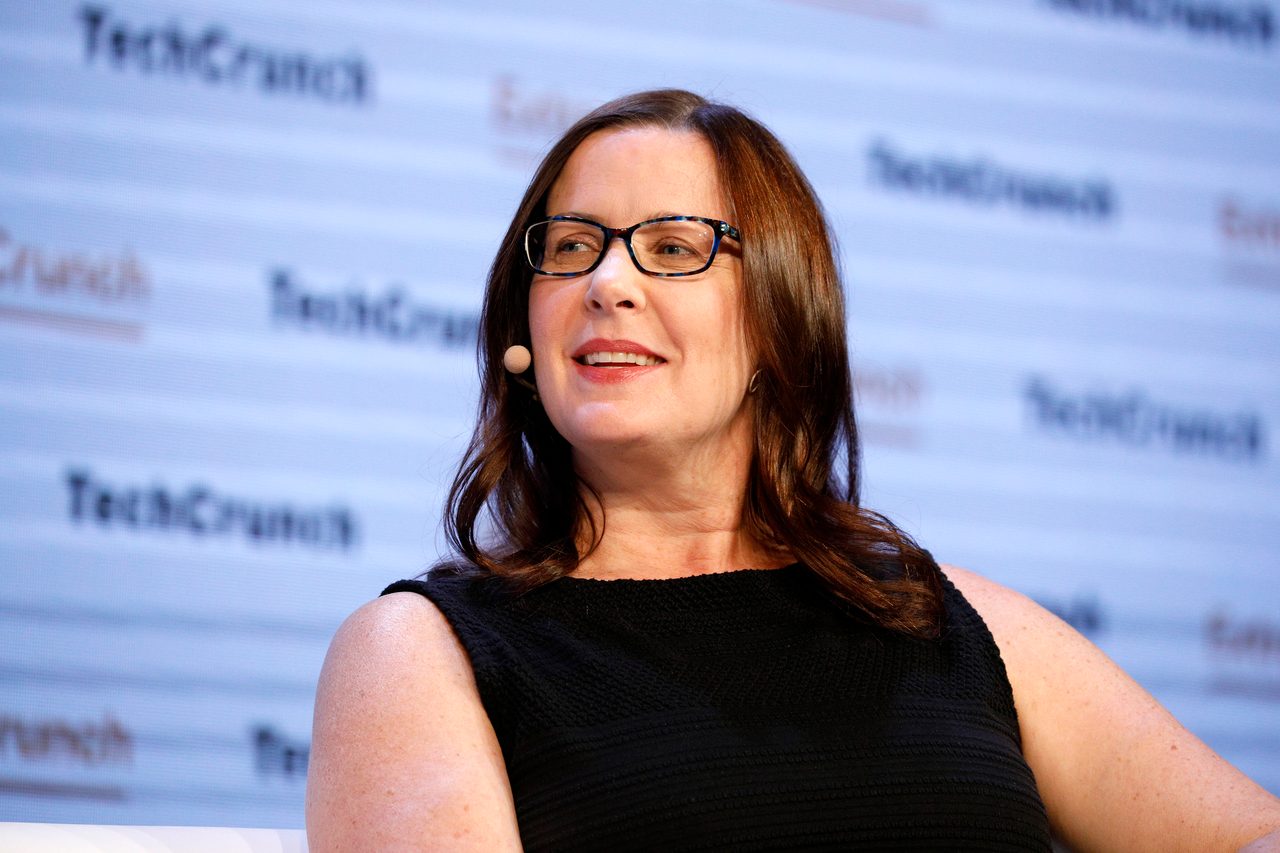
The tidy version of the Kabbage story is that three founders in Atlanta out-computed the banks and sold to American Express. It is accurate, and it skips the most instructive detail: when the sale finally happened, the buyer took the software and left the loans.
That was not an accounting quirk. It is the clearest statement anyone has made about what Kathryn Petralia actually spent eleven years building.
Two years before the first loan
Kabbage was founded in Atlanta in 2009 by Petralia, Rob Frohwein and Marc Gorlin, and it did not begin lending until May 2011. Two years is a long silence for a company whose product is money. It makes sense only if you understand that they were not building a lender first. They were building a decision engine, and the loans were downstream of it.
The premise was that small businesses generate enormous quantities of exhaust data — card settlements, shipping records, accounting ledgers, bank transactions — that describe solvency more accurately, and far more recently, than a credit file does. Pull it through APIs with the owner’s permission, score it automatically, and the arithmetic of small-business credit inverts. American Express’s own description of what it eventually bought captures the output: lines of credit up to $250,000, available in minutes.
Banks had not ignored this market out of stupidity. Relationship underwriting costs roughly the same whether the loan is $20,000 or $2 million, so a rational loan officer works on the $2 million. Kabbage’s insight was not that it could price risk better than a bank. It was that it could make the decision cheaply enough that a $20,000 line became worth writing at all. That is a manufacturing observation dressed as a finance company, and it is why Petralia’s title — president, the operator rather than the front person — fits the story better than “fintech visionary” does.
Capital agreed. SoftBank put $250 million into the company in August 2017, taking total equity raised to around $500 million; Forbes had ranked Petralia 98th on its list of the world’s most powerful women the same year. By the time the platform was operating inside American Express, its own materials claimed more than 500,000 small businesses served and over $16 billion in working capital extended.
The pandemic proved both halves of the thesis
In spring 2020 Kabbage paused ordinary lending, pointed the machine at the Paycheck Protection Program, and delivered more than $7 billion to over 300,000 borrowers — the second-largest PPP lender in the country by application volume. Whatever else is true, that is an automation thesis validated at national scale, at the exact moment the country needed decisions faster than loan officers could make them.
The same episode validated the inverse. In May 2024 the successor entity, KServicing Wind Down Corp., settled False Claims Act allegations with the Justice Department for up to $120 million, acknowledging that Kabbage had double-counted employee taxes, failed to exclude compensation above $100,000 per employee, and applied weak fraud controls. The government’s account was that thresholds were set low and verification steps removed in order to move volume.
Both things describe one machine. A system that can say yes in minutes is exactly as fast at the wrong yes. Speed is a property of the pipe, not a virtue of it — which means the controls are not a compliance tax bolted onto the product. They are the product, and they are the part that gets tested only under load.
What American Express actually bought
The deal was announced in August 2020 and closed that October: the team, the full product suite, the data platform, the intellectual property. The price was never disclosed, though KServicing’s later bankruptcy filing put it at roughly $750 million.
What Amex declined to buy was the credit. The legacy loan portfolio and the PPP business were carved out into the entity that became KServicing, which held around $1.3 billion in loans and filed for Chapter 11 in October 2022 under a stack of federal investigations. The Kabbage brand itself was absorbed and eventually retired into American Express Business Blueprint.
Companies are rarely separated this cleanly into their component theories. One buyer, one contract, and the answer is unambiguous: the durable asset was the underwriting infrastructure and the people who built it. The loans were an expense of proving it worked.
The part that transfers
Founders building in lending, insurance, payments or anything else the government watches are always running two companies at once, whether or not they have noticed.
One is a machine — the pipes, the models, the API integrations, the institutional knowledge of which signals mean anything. It compounds, it is hard to copy, and acquirers pay for it. The other is a balance sheet, or a book of obligations, or a regulatory footprint. It does not compound. It accumulates. And when the cycle turns, it is the half that ends up in front of a judge.
Petralia has kept working on the machine side. In 2022 she and Frohwein launched Keep Financial, which let employers give new hires cash up front that vests over time — the same instinct as Kabbage, applied to a different market: take a decision everyone makes slowly and badly, and automate it into something that clears in one step.
The thing worth building was never the loans. It was the answer.
This is an editorial profile assembled from public reporting, court and regulatory records, and company disclosures. Sources: American Express investor relations, Banking Dive, American Banker, TechCrunch, Wikipedia — Kabbage.


.jpg)