
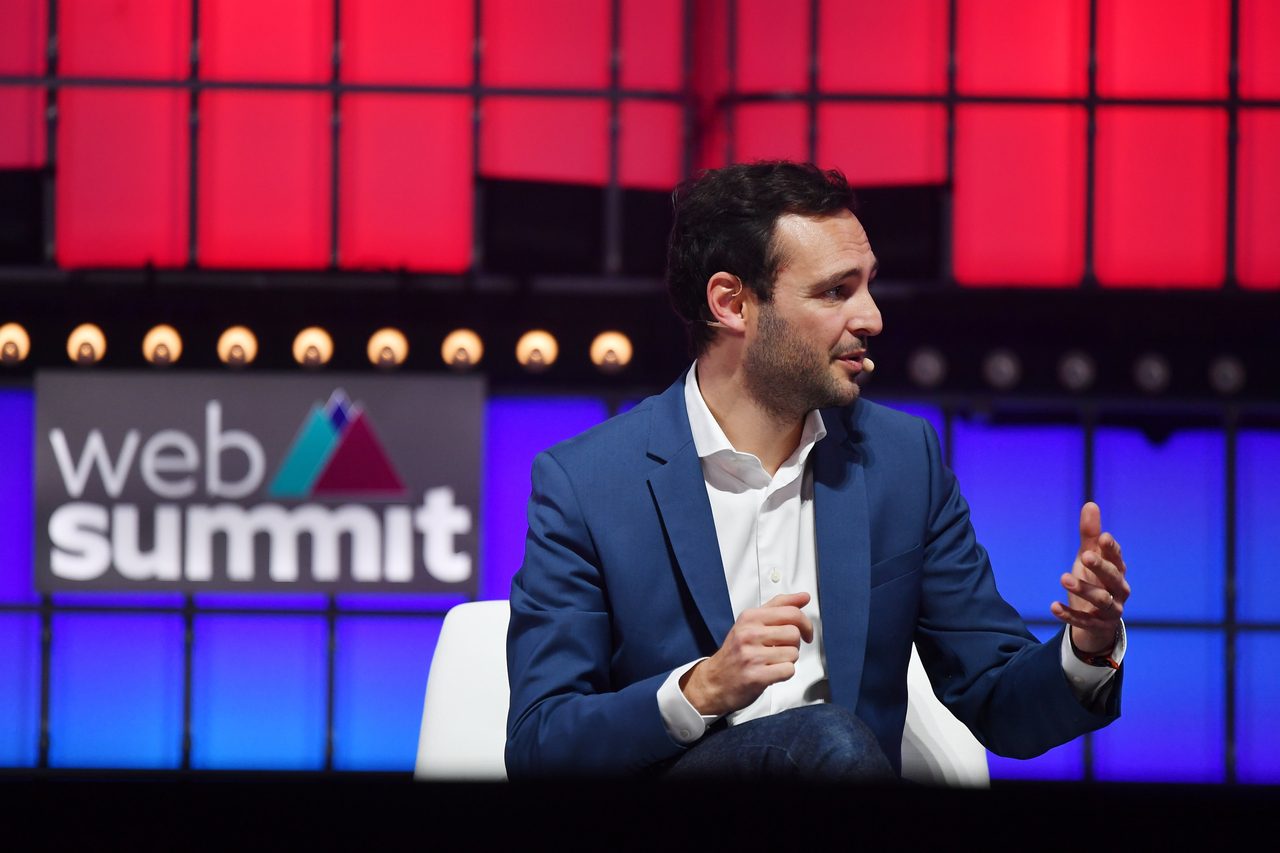
The number attached to Nicolas Julia is $680 million. SoftBank’s Vision Fund led it in September 2021, it valued Sorare at $4.3 billion, and at the time it was the second-largest round crypto had ever produced.
It is also the least useful number in the story. The more instructive one is 80 percent — the amount by which Sorare has reportedly cut its annual licensing bill to the sports leagues, without losing the leagues.
The premise that made it fundable
Sorare, launched in 2019 by Julia and CTO Adrien Montfort, is fantasy football where the player cards are actually yours. Not a licence to use an image inside someone else’s app — a tradable asset you can sell to another user or take with you if you stop playing.
That single decision did three things at once. It made the product feel categorically different from the free league games it competed with. It gave the company a transaction-fee business model rather than a subscription one. And it made a fantasy sports app fundable at the multiples of a marketplace, which is how a Paris startup ended up with SoftBank on the cap table.
The premise worked, for a while. By the 2021 round Sorare reported 600,000 registered users, 150,000 of them monthly active, and licences with 180 football organisations. MLB and the NBA followed in 2022. In January 2023 the Premier League signed a four-year licensing deal reported by SportsPro at around £30m a year, with minimum guarantees and an option for the league to buy equity.
That is the top of the arc, and the premise had by then been validated by institutions that are not easy to impress.
Ownership cuts both ways
If your revenue is a slice of a secondary market, your revenue is that market’s mood. When the wider digital-collectibles trade cooled, Sorare’s income went with it.
French outlet L’Informé’s figures, reported via Maddyness, show revenue falling 59% to €59m in 2023, then 27% to €43m in 2024, with 2025 forecast roughly flat at €42m. Losses were put at more than €220m in 2023 and around €110m in 2024.
Those are not the numbers of a company that had a bad quarter. They are the numbers of a company whose cost base — including league minimum guarantees — was negotiated at the top of a cycle and had to be serviced at the bottom of one.
The regulator problem is the product
The tradability that made Sorare fundable is also the thing regulators keep looking at.
In September 2024 the UK Gambling Commission charged the company with providing facilities for gambling without an operating licence under the Gambling Act 2005, with a first hearing at Birmingham Magistrates’ Court on 4 October 2024. Sorare denies it, says the Commission has misunderstood its business, and has entered not-guilty pleas to all three counts — a position set out in detail by the law firm Macfarlanes. The trial has been pushed back repeatedly and is now listed for 7 June 2027 — meaning Sorare will have spent nearly three years operating under an unresolved criminal charge in one of its largest markets.
France went the other way and wrote a rulebook. Decree No. 2026-60 of 4 February 2026 opened an experimental regime for jeux à objets numériques monétisables — games built on tradable digital objects — running to May 2027. The terms are tight: players may never win anything denominated in euros, in-kind rewards are capped at €1,000 a year, and operators file a declaration with the ANJ rather than the platform simply asserting it is not gambling.
You cannot defend the moat here without also defending the legal exposure. They are the same feature.
The unwind
What Julia has spent the last two years doing is dismantling, in public, most of the structure the 2021 raise paid for.
In February 2024 the company cut 22 New York roles, about 13% of staff. In October 2025 it moved its cards off Ethereum’s StarkEx layer to Solana, with user ETH balances going to Base — an infrastructure cost decision dressed as a technology one. In November 2025 it opened a redundancy plan covering around 35% of the workforce, roughly 30 of 110 French roles, closed the New York office entirely, and moved Montfort out of the CTO seat onto the board. Julia’s stated goal is profitability in 2026, and he has said the plan does not depend on raising a Series C.
The most interesting move is the quietest one: renegotiating the league deals down by a reported 80% while keeping the partnerships. Minimum guarantees signed in 2023 were the hardest thing on the balance sheet to move, and shifting them without losing the Premier League, MLB or the NBA is genuinely difficult commercial work — harder than raising the money was.
What the story actually demonstrates
Founder profiles usually treat the raise as the achievement. Sorare is a useful corrective, because the raise was the easy part.
Julia sold SoftBank a thesis, watched the market that made the thesis true evaporate, and then took the company apart while the leagues, two regulators and 378,000 cardholders watched. Most founders in that position defend the premise until the cash runs out, because the premise is what they are famous for.
None of this is a comeback story yet, and it would be dishonest to write it as one. Revenue has declined three years running, the profitability target is self-declared and unaudited, and the UK case will not be decided until mid-2027 — a conviction there would be a material event, not a footnote.
But the transferable lesson does not depend on how it ends. If the feature that makes your company fundable is also the feature that makes it cyclical and legally contested, then your real job is not defending that feature. It is finding out how much of the business survives without it — and finding out early, while the decision is still yours to make.
This is an editorial profile assembled from public reporting and regulatory filings. Sources: CoinDesk, Macfarlanes, Légifrance — Decree No. 2026-60, Forbes, TechCrunch, Maddyness, SportsPro, Premier League, Wikipedia — Sorare.



.jpg)