
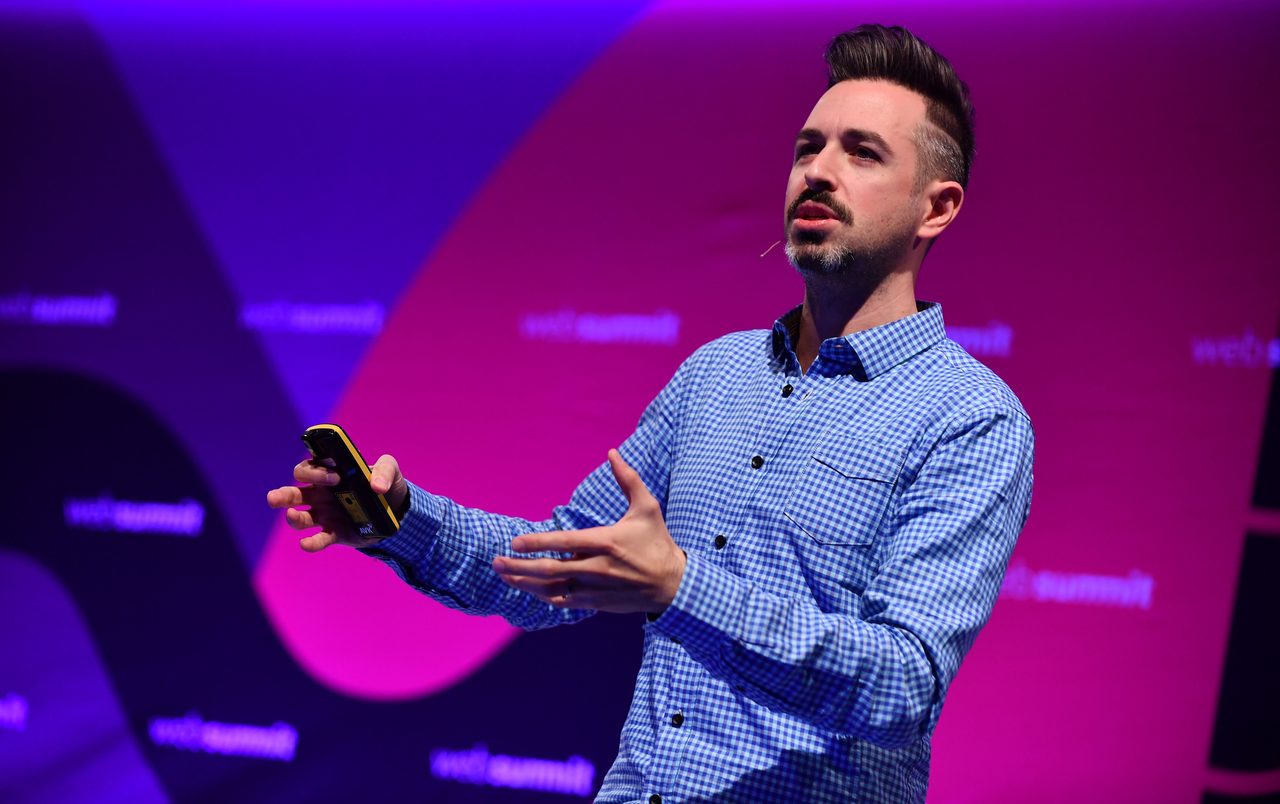
The standard version of Rand Fishkin’s career is a morality tale about venture capital. Founder takes institutional money, founder loses the plot, founder renounces institutional money. It is tidy, and Fishkin has done more than anyone to circulate it — he wrote an entire book in 2018 about how badly he handled his own company.
Renunciation is not actually what happened. Fishkin raised outside money for his second company too. What he changed was not his willingness to take other people’s capital. It was the paperwork.
A company that worked, and equity that didn’t
Moz began in 2004 as SEOmoz, a Seattle consulting shop Fishkin ran with his mother and co-founder Gillian Muessig, and became a software company on the back of a blog that taught search marketing to anyone who would read it. In May 2012 it raised $18 million from Foundry Group and Ignition Partners, with Brad Feld joining the board — part of the $29.1 million the company took in over its life. By the time Fishkin left, Moz was doing north of $50 million a year with more than 200 employees.
By any measure that exists outside venture capital, that is a company that worked. Inside venture capital it was a disappointment, and Fishkin absorbed the disappointment personally. He stepped down as CEO in January 2014, handing the job to COO Sarah Bird and moving to an individual contributor role, saying he was out of his depth and poorly suited emotionally to the obligations of the position. He left the company entirely in February 2018, rating his own exit a four out of ten on a scale where ten is leaving on wonderful terms.
The arithmetic nobody puts on a pitch deck
The part that deserves more attention than the resignation is the money, and Fishkin has been unusually specific about it. He has written that he had $371,000 in savings when he walked out in 2018, holding roughly 20% of Moz’s common stock.
A private equity buyer had offered $90 million for a company then doing $52 million in revenue — a lacklustre multiple, as he put it, but one that would have paid him and his wife Geraldine over $14 million. That deal collapsed. When Moz was finally acquired in 2021 by iContact, a Ziff Davis subsidiary, the terms were never disclosed; Fishkin has said only that his own proceeds were far below that $14 million figure, and that he has earned less than friends who took good jobs at large tech companies. He then wrote just over $700,000 in personal cheques to Moz employees and former employees whose options had not paid out fairly.
That is the whole lesson in one paragraph. Preferred stock gets paid first, and common stock — the founder’s, the employees’ — is the residue. A $50-million-revenue business is a genuinely good business and can still be a mediocre financial event for the people who built it.
Why the HubSpot regret is the wrong takeaway
Fishkin has written that he devoted a chapter of his book to the argument that he should have accepted HubSpot’s 2011 acquisition offer, and that he never felt the regret more sharply than just before he left Moz. It gets read as a timing error — he should have sold at the top.
That reading is too small. He had already spent nine months of 2010 and 2011 negotiating a $24 million round that fell apart in due diligence, a story he published in forensic detail at the time. Both episodes point at the same structural fact: once a cap table contains preferred stock and a growth mandate, a merely good outcome stops being something the founder is free to choose. Turning down that offer was a rational move inside a frame someone else had installed.
The correction is legal, not emotional
In June 2018 SparkToro raised $1,299,500 from 35 accredited angel investors — among them Dharmesh Shah, Glenn Kelman and Spencer Rascoff, per GeekWire. The company is an LLC rather than a C-corp, so it can distribute profits. Founder salaries are capped at Seattle software averages until every investor has been repaid in full through those distributions. Changing any of it requires 80% of unit holders.
Then Fishkin published the documents so anyone could copy them. That is the actual innovation. A bespoke structure is a personal preference; open paperwork is an attempt to make an alternative available by default, which is the only version that matters to founders without his leverage.
The receipts, so far
SparkToro reached breakeven in November 2020 and, in June 2023, returned 100% of the original capital to all 35 investors while remaining a three-person company — Fishkin, co-founder Casey Henry and Amanda Natividad. It shipped a third major version of the product in August 2026, with an API and MCP server, and Fishkin and Natividad have a second book, Zero Click Marketing, due this autumn.
None of that is a unicorn. It is not supposed to be.
The transferable point is not avoid venture capital. Plenty of companies genuinely need it, and Fishkin’s own angels are still owed multiples. It is that the financing instrument silently defines which endings count as success, and most founders sign it before they have decided what ending they want. Fishkin’s mistake at Moz was never execution. It was accepting somebody else’s definition of a good outcome and only reading the fine print on the way out.
This is an editorial profile assembled from public reporting and Rand Fishkin’s own published writing. Sources: SparkToro blog, GeekWire, Search Engine Land, Penguin Random House.


.jpg)