Squatty Potty got a deal on Shark Tank, and it was the beginning of the story rather than the end. On the show’s 100th episode, which aired November 14, 2014, Bobby Edwards and his mother, Judy, accepted Lori Greiner’s offer of $350,000 for 10% of their toilet-stool company, and Greiner helped get the stool into Bed Bath & Beyond, Entrepreneur reported. A year later a viral ad about a unicorn that poops soft-serve ice cream turned the stool into a punchline everyone knew. The brand has since been sold twice. In May 2021 it went to the e-commerce company Aterian for about $19 million in cash plus inventory, earnout and transition payments. In July 2026 Aterian sold it on, bundled with five other brands, to Trademark Global for $18 million. The stool is still on sale in October 2026. Its inventor, meanwhile, is facing a federal charge that he has pleaded not guilty to; that is covered below.
Did Squatty Potty get a deal on Shark Tank?
Yes, on the second try. Edwards told MedCity News in 2014 that the show first turned the product down for Season 5 because it did not want bathroom products. A second audition tape, he said, “really nailed down that Squatty Potty is a health tool,” and it was accepted for Season 6. Utah Business later reported that a former producer had turned the company down because they couldn’t “stomach” the subject.
In the tank, MedCity reported, Barbara Corcoran passed because she “didn’t get a good vibe” from Bobby’s enthusiasm. Greiner’s offer was the one the family took. Entrepreneur’s 2016 timeline of the company records the result: Greiner “invests $350,000 for a 10 percent stake” and helps negotiate prime placement at Bed Bath & Beyond. That implies a $3.5 million valuation, as our post-money valuation calculator shows.
Did it close? Entrepreneur reports it as an investment, and an undated portfolio note from the investment fund CYwP, which also put money into Squatty Potty, lists Greiner as an investor. What happened to her 10% when the company later took private-equity money and was sold has never been disclosed.
The Shark Tank bump, as the company told it
The sales numbers after the episode are the company’s own. KSL reported in 2016 that the company “reportedly” did several million dollars of business in the 48 hours after the episode aired. Entrepreneur put online sales at $3 million three weeks after it aired. Bobby Edwards called the show “a big boost for our business” (KSL). None of these figures is audited.
Before the tank: a footstool for Mom
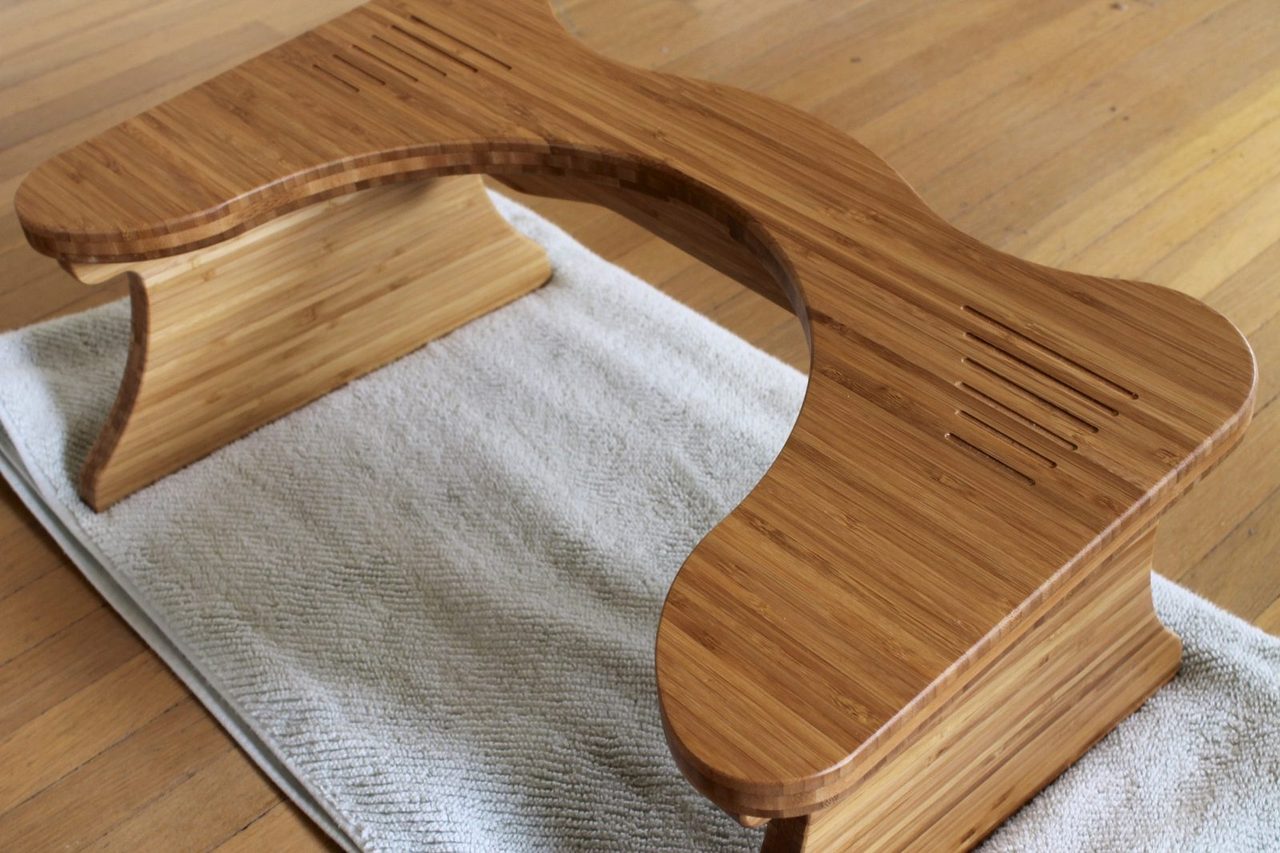
The idea came from Judy Edwards’s constipation. Her therapist gave her a footstool, Entrepreneur reported, and she kept tripping over it, so Bobby proposed a stool that wraps around the base of the toilet. “The story really did start with my mom and her problem with constipation,” he told KSL. MedCity reported that the first Squatty Potty was made in July 2011 with the help of a neighbor who had a wood shop. KSL described a family business in St. George, Utah, planned at the kitchen table and run out of the garage, with Bobby’s parents, Bill and Judy, as co-founders. For the first six months the family shipped orders from home.
The early marketing was grassroots. The family mailed about 100 wooden samples to alternative-health bloggers, and a 2011 local expo went badly: “We were shunned,” Bobby told Entrepreneur. A May 2012 segment on The Dr. Oz Show quintupled sales, according to Entrepreneur. QVC turned them down. “How do we demonstrate this on air?” was the problem, as Bobby recalled it.
The unicorn ad
The ad that defined the brand came out in October 2015. It was made by Harmon Brothers, a Provo video agency (Utah Business, KSL), and it explained the “colon kink” through a unicorn and a narrating prince. Entrepreneur reported it cost $500,000 for production, focus-grouping and promotion, and drew 30 million views in a week. KSL counted nearly 22 million YouTube views by May 2016. Those measure different things.
The sales claims also differ by source. Utah Business reported that by the end of January 2016, online sales were up 600% and retail sales up 200% since the video’s debut. Entrepreneur instead said revenue came in 600% above projections. For 2015 revenue, Entrepreneur said sales “eclipsed $15 million.” Bobby told Utah Business: “We had estimated sales of $12 million last year. We reached $18 million.” KSL cited a Forbes ranking that put 2015 revenue at $18.7 million. That makes three figures for one year, all traceable to the company. His own explanation of the ad holds up better than the numbers: “It’s not only entertainment; it educates—it’s edutainment.”
What happened to Squatty Potty after Shark Tank: who owns it now
The company has changed hands more than once:
- April 2017: Squatty Potty announced that Bevel Brands, “along with funding from Sachs Capital,” had made a strategic investment, and that the proceeds would “primarily be used to provide liquidity to existing shareholders,” according to the release as reproduced by CB Insights. In other words, the money went mostly to existing owners, not into the business. The stake and price were not disclosed.
- May 2021: Aterian, formerly Mohawk Group, bought the business of Squatty Potty, LLC in an asset purchase. According to Aterian’s press release filed with the SEC, it paid about $19.0 million in cash, roughly 4.0 times trailing operating income. It also paid about $1.1 million for inventory, agreed to an earnout of up to about $4.0 million, and owed $8.0 million for transition services, payable in stock or cash. For the twelve months to March 31, 2021, the release gave unaudited revenue of about $16.8 million and operating income of about $4.7 million.
- July 2026: Aterian completed the sale of six brands, Mueller Living, PurSteam, hOmeLabs, Squatty Potty, Healing Solutions and Photo Paper Direct, to Trademark Global, LLC “for $18.0 million in cash, subject to certain purchase price adjustments,” according to its July 2026 8-K. Trademark Global is a privately held company founded in 1999 that manages more than 20 consumer brands, Aterian said. Squatty Potty’s share of the price was not broken out.
Set the 2021 filing next to the 2016 interviews and one detail stands out. In 2016 Bobby told KSL the company did “tens of millions of dollars in sales a year.” The trailing revenue disclosed at the sale five years later, about $16.8 million, was below the $18 million he said it reached in 2015. The two figures may not be measured the same way, but the filing does not show a steadily rising line.
Is Squatty Potty still in business? Yes. As of October 23, 2026, squattypotty.com was selling stools and the flushable wipes Aterian launched in September 2025, and the brand’s own Amazon store was selling the Original 2.0 toilet stool. One loose end: the website’s privacy policy still named Aterian, three months after the sale.
Squatty Potty Original 2.0 toilet stool
The founder’s indictment
In February 2026 the U.S. Attorney’s Office for the District of Utah announced that Robert “Bobby” Edwards, 50, had been indicted by a federal grand jury on February 10 on a charge of receipt of child pornography and arrested on February 12 in Washington County, Utah, Fox News and KPTV reported. He pleaded not guilty at his initial court appearance. An indictment is an accusation, not a finding of guilt. Aterian, which owned the brand at the time, told Fox News: “Aterian has no affiliation, partnership or ongoing relationship with Mr. Robert Edwards.” We found no reporting on how the case has been resolved as of October 23, 2026.
What founders can take from it
First, a rejection from producers can turn on how you frame the product. The second tape sold a health tool, not a bathroom gadget. Second, the unicorn ad worked because it explained the product while it entertained, and it came after years of earned media (Dr. Oz, Howard Stern, Shark Tank) and with a $500,000 budget behind it. Third, a Shark deal is one capital event among several. Here it was followed by a liquidity round for existing owners, an asset sale and a portfolio resale, and the Shark’s own outcome was never disclosed. Finally, put each revenue claim next to the filing. For Squatty Potty, the 2021 SEC exhibit is the most reliable number on the record, and it is more modest than the interviews. For more on building a consumer brand this way, see our guide to building a $10M consumer brand without tech.
For more founders who were turned down before they were cast, read our guide on how to get on Shark Tank. Squatty Potty’s sale is one of the documented exits in our ranking of the most successful Shark Tank companies.