SAFE vs. Convertible Note: How Startups Raise Money Before a Priced Round
How a post-money SAFE and a convertible note differ: valuation caps, discounts, interest and maturity, plus worked dilution math for stacking several rounds.
56 stories
How a post-money SAFE and a convertible note differ: valuation caps, discounts, interest and maturity, plus worked dilution math for stacking several rounds.
Section 174 R&D expensing explained: the 2022 capitalization rule it reversed, the closed small-business amend window, and the Section 280C catch founders miss.
How 409A valuations actually work: the safe harbors, what triggers a refresh, why underpriced options risk a 20% IRS penalty, and what a valuation costs in 2026.
ISO vs. NSO stock options explained: how each is taxed at exercise and sale, the $100K ISO limit, the AMT trap, and which one your offer letter actually grants.
A 2026 guide to founder equity splits and vesting schedules, covering how to split equity fairly, how vesting works and how to read your cap table.
QSBS explained: how Section 1202 lets founders exclude up to $15M in startup gains, what changed in 2025 and where the exclusion stops applying.
A founder's guide to quarterly estimated taxes in 2026, covering who has to pay, when, how much and the safe harbor rules that help you avoid penalties.
A comparison of the Solo 401(k) and SEP IRA for self-employed founders, explaining how each account's contribution buckets work and the math behind choosing.
What startup founders should pay themselves in 2026, using Kruze Consulting payroll data and a Pilot survey of 1,844 founders by stage and funding source.
Growth rate, CAC payback, and NRR by ARR stage, sourced from SaaS Capital's 2025 growth survey and High Alpha's 800-company benchmarks report.
Mercury or a traditional bank? Ramp or Brex? QuickBooks or Xero? A stage-by-stage guide to the finance stack founders actually run their startup on in 2026.
Most 'best self-employed jobs' lists are guesses. This one is ranked by real BLS median wage data, from bookkeeping to financial advising.
LTV, CAC, and the 3:1 ratio explained for startup founders — with real formulas, benchmarks by business model, and a practical playbook for improving them.
Five pricing and finance books for founders beyond Profit First, covering what to charge, which clients to keep and how to actually read your numbers.
The startup valuation methods that matter in 2026, before and after revenue, plus the VC math behind term sheets and how valuation drives dilution.
LLC vs. S-Corp explained: when an S-Corp tax election can cut self-employment tax for your LLC, and how founders should run the numbers.
A guide for first-time founders raising a seed round in 2026: when to raise, how much to ask for, which structure to use and how to close the round.
You can grow revenue every quarter and still run out of cash. The Profit First method flips the accounting formula so profit is a habit, not a hope.
Bootstrapping vs. venture capital in 2026, run through the real numbers: dilution, ownership at exit, growth speed, and which path makes you more money.
A no-nonsense 2026 guide for Gen Z founders raising their first $500K: angels vs. pre-seed funds, SAFEs, valuation, the deck, and how to actually close.
Latrell Goss, who grew up in Chicago, runs a financial literacy business that aims to help people build healthy financial habits he was never taught.
Abe Metellus, who came to the U.S. from Haiti at 12, runs a financial education business that teaches people about credit and their financials.
Jesse Burrell, known as the REI Data King, is a real estate investor who uses big data to help himself and other companies flip houses successfully.
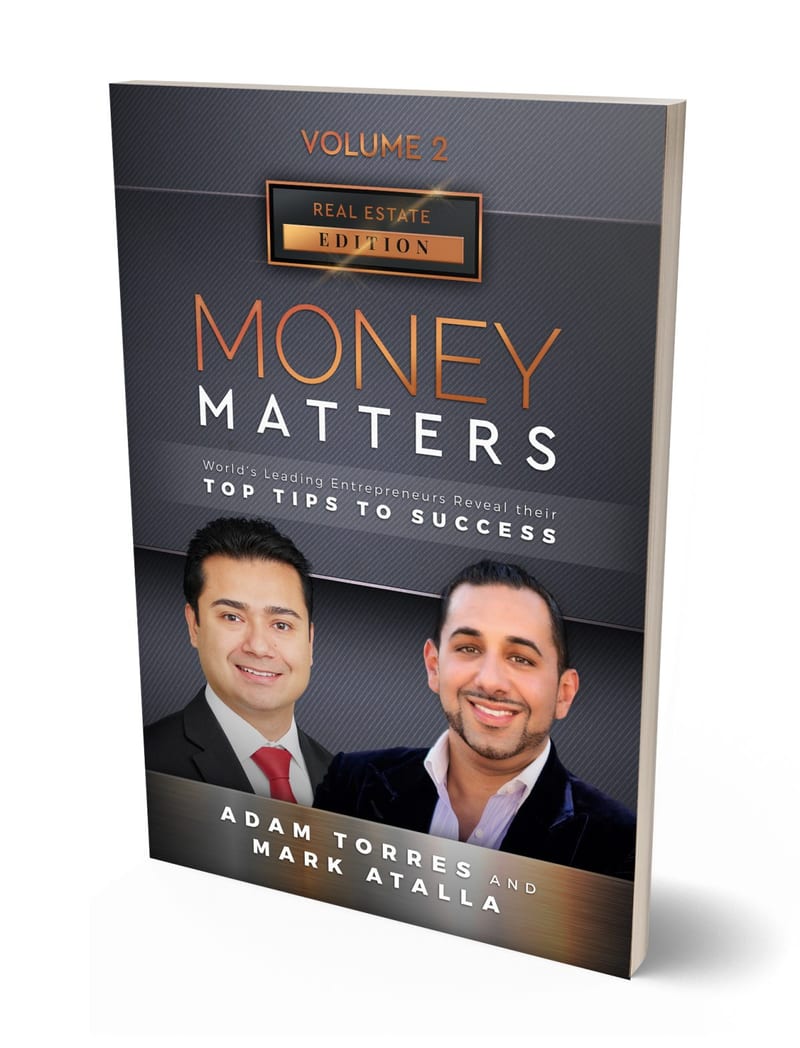
Mark Atalla, founder of private lender Carlyle Capital, shares real estate success tips in his new book Money Matters, with entrepreneur Adam Torres.
Daniel Goldsmith, a California lead generation expert and affiliate marketer, explains how personal selling has shaped his career in marketing.
How to get started acquiring businesses without millions in the bank, from understanding your skills and goals to finding owners who want to sell.
Robert Martinez, owner of Rockstar Capital, runs twenty-three apartment communities across Texas and markets them through storytelling and DailyRock videos.
Joy Holland, who repaired her own credit, now offers credit repair services and explains why credit is everything and how you can repair yours.
Eterbase, a crypto-fiat exchange in Europe, rolls out its Treasury Gateway to simplify B2B payments between crypto projects and traditional enterprises.
eFuse, a web and mobile app that serves as a professional hub for esports and video games, was founded at Ohio University and raised a $1.4M seed round.
Mike Moaid Abbadi, an Army veteran, runs Tampa Bay Luxury, a used car dealership that helps buyers with bad credit get the car of their dreams.
Three ways homeowners can earn money from their home without selling it, starting with holiday letting through platforms such as Airbnb and Booking.com.
Why business credit matters for small business loans and credit cards, how agencies like Equifax and Experian score businesses, and how to build it.
Jeff Sekinger left private wealth banking to run a financial consulting business that helps clients leverage low interest credit to create income.
Mack, who migrated from Haiti as a child, left corporate jobs for credit repair and built a business doing at least $1.2 million in sales his first year.
Duuple CEO Abby Frimpong draws on her non-profit fundraising background and explains why virality and storytelling set successful crowdfunding apart.
Cathy Bethea, a real estate agent and former mortgage broker in the financial industry since 2000, works with FES to help people facing credit challenges.
Kaleef Williams left his job at a large rental company to become his own boss and is now breaking barriers in the credit repair industry.
Thomas Carter, founder of security token platform DealBox, enlists former Nike brand director Jerome Conlon to help bring cryptocurrency to the masses.
Brandon L. Johnson, CEO of No Bad Days LLC, explains five reasons to repair your credit score, from better home loan rates to what a 2% difference can cost.
Why budgeting matters beyond the basics, with survey data on how few households budget and how a proper budget leads to financial freedom.
Lyle Hauser founded the Vantage Group in 1998, a South Florida-based private equity firm and business consultancy geared toward fledgling companies.
This May, Fenox Venture Capital will hand a $1M prize to the winner of the Start Up World Cup, one of the top global startup competitions.
A clear, step-by-step plan to start investing in 2026: set goals, build a safety net, pick low-cost funds, and avoid the mistakes that cost beginners.
David Zhao, founder of digital agency NXTFactor and the food franchises behind Chubby Cattle and Meet Fresh, is bringing technology to the dining industry.
Larry Izenberg of Centex Funding shares how he became an entrepreneur and the strategies he used to scale his company from the idea stage.
Jack Gleason lost money trading for three years before founding Major League Trading, which has taught more than 2,500 students futures and options.
CPA Micah Fraim explains how modernizing accounting with digital services helps small businesses maximize savings beyond traditional tax advice.
Showing the 48 most recent of 56 stories. Browse the full archive →